
Introduction to White Bolognese Sauce
When it comes to pasta sauces, traditional red sauces often steal the spotlight. However, white bolognese sauce deserves a place at the table, and here's why! This creamy, rich sauce combines ground veal and savory Italian sausage, creating a luscious blend that’s perfect for any pasta night. Its comforting flavors evoke cozy evenings and shared meals, making it an excellent option for both weeknights and special occasions.
Why White Bolognese Sauce is a Game Changer?
This isn’t just another pasta sauce; it’s an experience! The white bolognese sauce stands out due to its velvety texture and depth of flavor. Unlike its tomato-based counterparts, this sauce relies on a combination of high-quality ingredients like heavy cream and chicken stock to deliver a silky consistency that clings beautifully to every noodle.
To elevate the sauce further, fresh herbs like sage add a delightful aromatic quality. If you’re looking to switch up your pasta game, this recipe will not only impress your dinner guests but also create a warm, inviting atmosphere in your kitchen. Plus, it’s a fantastic way to bring everyone together around the dinner table!
For detailed tips on how to master this dish, don't miss the full recipe below!
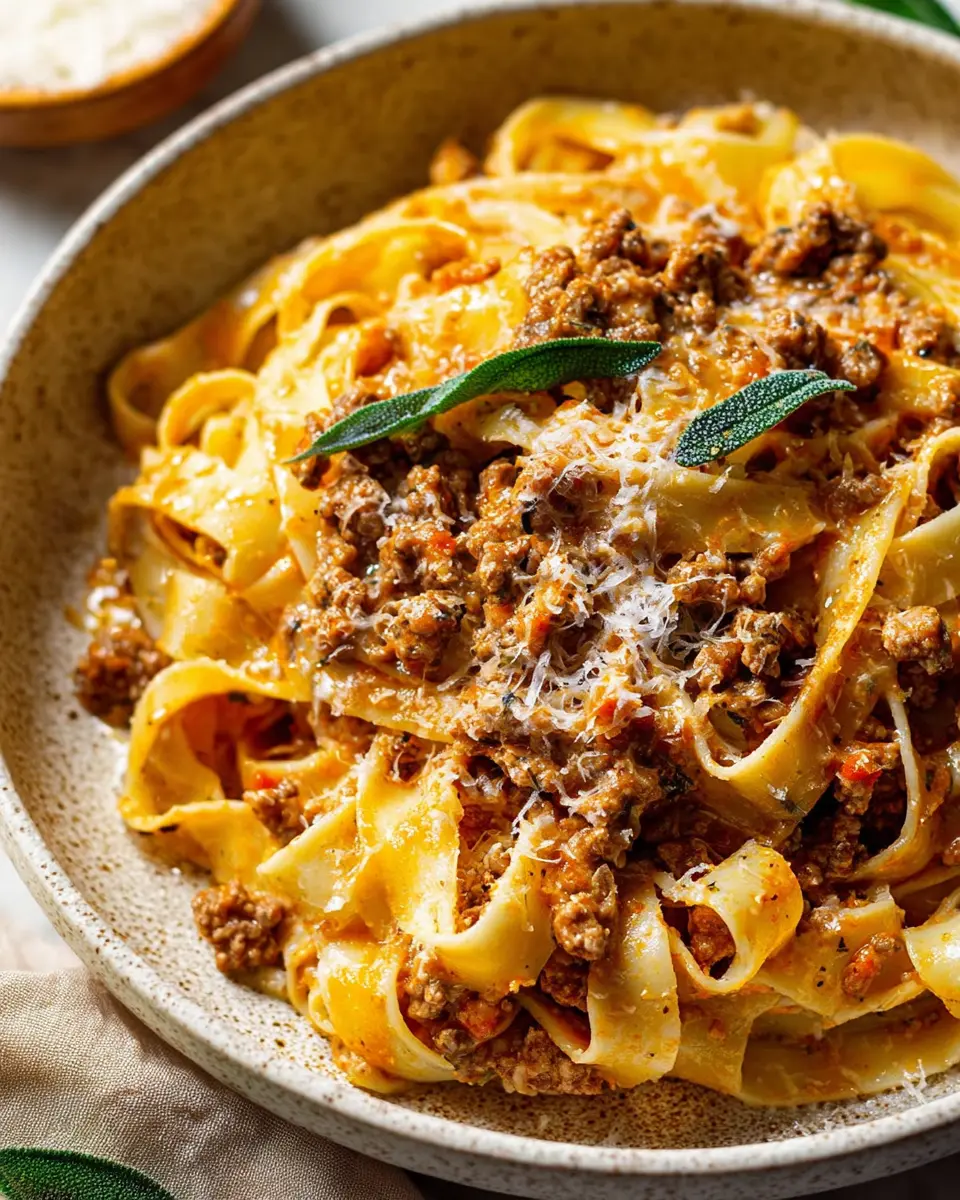
Ingredients for White Bolognese Sauce
Essential Ingredients
Creating a luscious white bolognese sauce starts with the foundation of its essential ingredients. You'll need:
- Unsalted butter for adding richness.
- Sage leaves offer aromatic depth.
- Pancetta (finely diced) introduces a savory note.
- Ground veal and Italian sausage (removed from casings) serve as the hearty base of the sauce.
- A variety of chopped vegetables, including garlic, leeks, celery, fennel, and carrots, which provide color, flavor, and nutrients.
Additional Ingredients for Flavor
To elevate your white bolognese sauce, consider these flavorful additions:
- Dry white wine is traditionally included, but substitute it with chicken or vegetable broth for a non-alcoholic version.
- Heavy cream imparts a luxurious texture.
- Nutmeg (optional) adds warmth and spice.
- Finally, a wedge of parmesan cheese, including the rind, offers umami and enhances the overall richness.
Discover more about these ingredients and their roles on sites like Serious Eats, where expert chefs share insights on Italian cooking.
With this fantastic lineup, you're well on your way to creating a delightful white bolognese sauce that will impress friends and family alike!
Preparing White Bolognese Sauce
Creating a rustic and comforting white bolognese sauce doesn't have to be overwhelming. With a few essential steps, you'll be on your way to serving a delectable dish that impresses. Let’s walk through the process, step-by-step.
Prep the Vegetables
Before you dive into cooking, it's vital to prep your vegetables to ensure a smooth cooking experience. Start by selecting fresh veggies for your sauce: carrots, leeks, shallots, celery, and fennel.
- Tip: Use a food processor to pulse these vegetables until finely chopped, saving your time and energy. If you prefer doing it by hand, dice them very finely to allow them to melt into the sauce as it cooks.
Cook the Pancetta and Meats
Now, let’s bring some flavor into the mix! Heat a generous tablespoon of unsalted butter in a large braiser or Dutch oven over medium heat. Add in your finely diced pancetta, cooking it until it’s crispy, about 5-6 minutes. This will add a rich depth to your sauce.
Next, introduce a pound each of ground veal and hot Italian sausage, breaking them up with a spoon. Cook until browned and any liquid has evaporated. Once done, transfer the crispy pancetta and cooked meats into a bowl to rest while we prepare the veggies.
Sauté the Vegetables
Once your meats are set aside, add the prepped vegetables to the same pot. Sauté them for about 5 minutes until they soften and start to brown slightly. This step brings out their natural sweetness and adds a delicious base flavor to your white bolognese sauce. Don’t forget to toss in the minced garlic towards the end of this step, cooking it for just a minute to avoid burning.
Combine and Simmer
Now it’s time to bring everything together! Return the pancetta and meats into the pot, then pour in your savory chicken stock and, if you're feeling indulgent, a cup of heavy cream. Toss in your bay leaves, a pinch of freshly grated nutmeg (if desired), and a Parmesan rind to round out these flavors. Bring everything to a simmer, cover loosely, and let it work its magic for about two hours. Stir occasionally and season with salt and pepper to taste.
Prepare the Pasta
Finally, let’s get the pasta ready! Bring a pot of salted water to a boil and cook your favorite pasta until al dente—egg pappardelle noodles are a great choice. Reserve some pasta water, then drain the noodles. Combine them in a large skillet with half of your white bolognese sauce, allowing it to simmer for about 10 minutes. Stir in a splash of cream and freshly grated Parmesan for an irresistible finish.
And there you have it, a delightful white bolognese sauce that brings warmth and flavor right to your table. Enjoy your masterpiece!
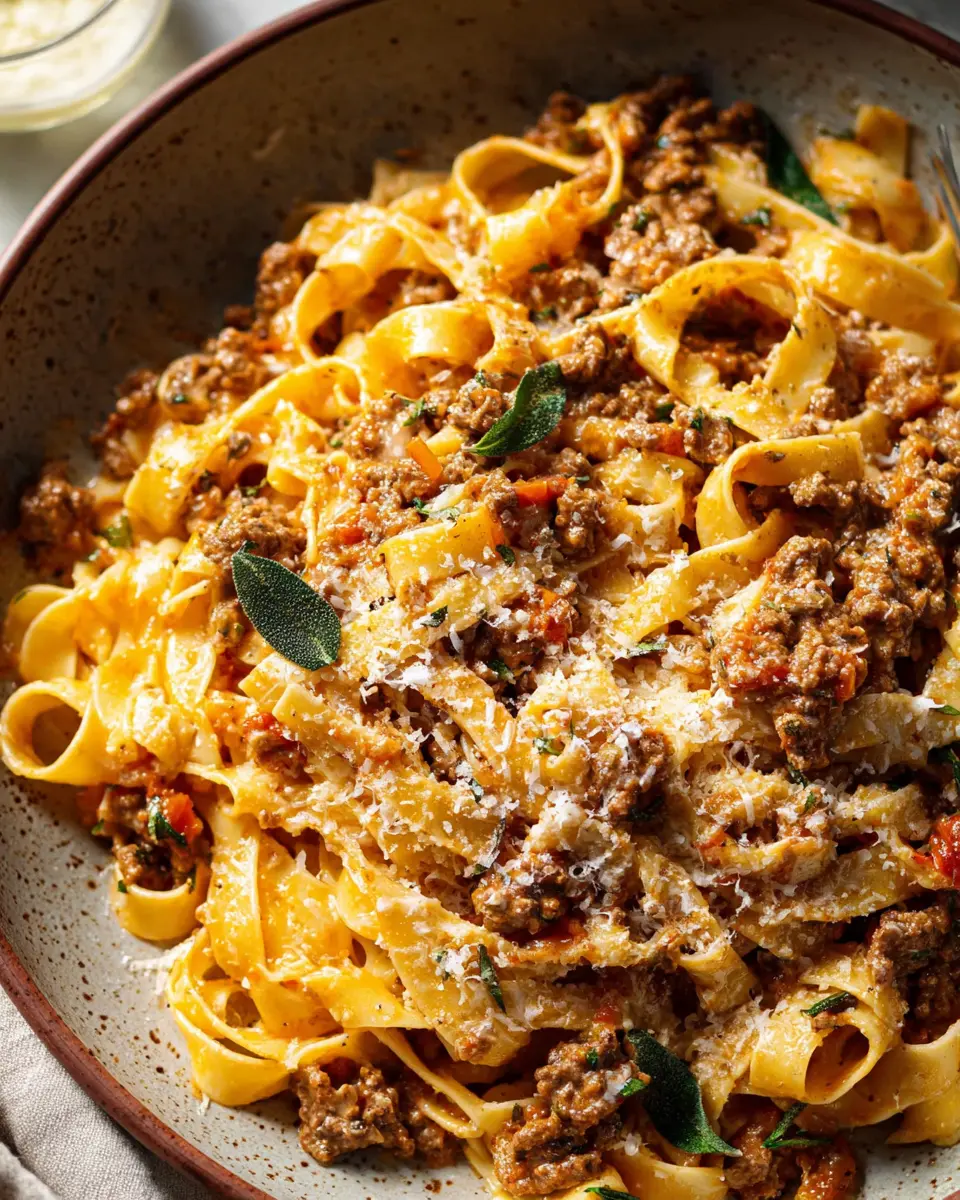
Variations of White Bolognese Sauce
Substituting Meats
One of the great things about white bolognese sauce is its versatility! While traditional recipes call for ground veal and Italian sausage, feel free to get creative. You can swap in ground turkey for a lighter option or use beef for a heartier flavor. For a delightful twist, consider using chicken ham or turkey bacon for a unique taste that'll impress your guests. You might find that a blend of meats creates an entirely new flavor profile that's just as satisfying.
Vegetable Addition Ideas
Want to boost nutrition and flavor? White bolognese sauce can handle various vegetables. Try adding chopped mushrooms for an earthy touch, or toss in some spinach at the end for a pop of color and nutrients. Zucchini or bell peppers can also work well, giving the sauce a lovely texture. Plus, if you have leftover veggies in your fridge, this is a fantastic way to incorporate them without wasting anything! Embrace the opportunity to customize and make it your own.
For more inspiration on cooking vegetables, visit Bon Appétit.
Cooking Tips and Notes for White Bolognese Sauce
Best Practices for Creaminess
To achieve the perfect creamy texture in your white bolognese sauce, using heavy cream is essential. Add it towards the end of cooking; this gives the sauce a luscious finish. If you want an even richer flavor, consider incorporating a splash of chicken broth as a substitute for wine. And don't forget to save some of the starchy pasta water for mixing; it helps the sauce cling beautifully to your pasta!
Flavor Enhancements
Elevate your white bolognese sauce with a few simple additions. A dash of lemon zest can brighten the flavors, and some freshly grated nutmeg adds warmth. For a more complex taste, try incorporating some finely chopped herbs like parsley or thyme just before serving. Not only will this add depth, but it also brings a lovely fresh aroma! Feeling adventurous? Check out this guide on how to use herbs effectively in your cooking for more ideas!
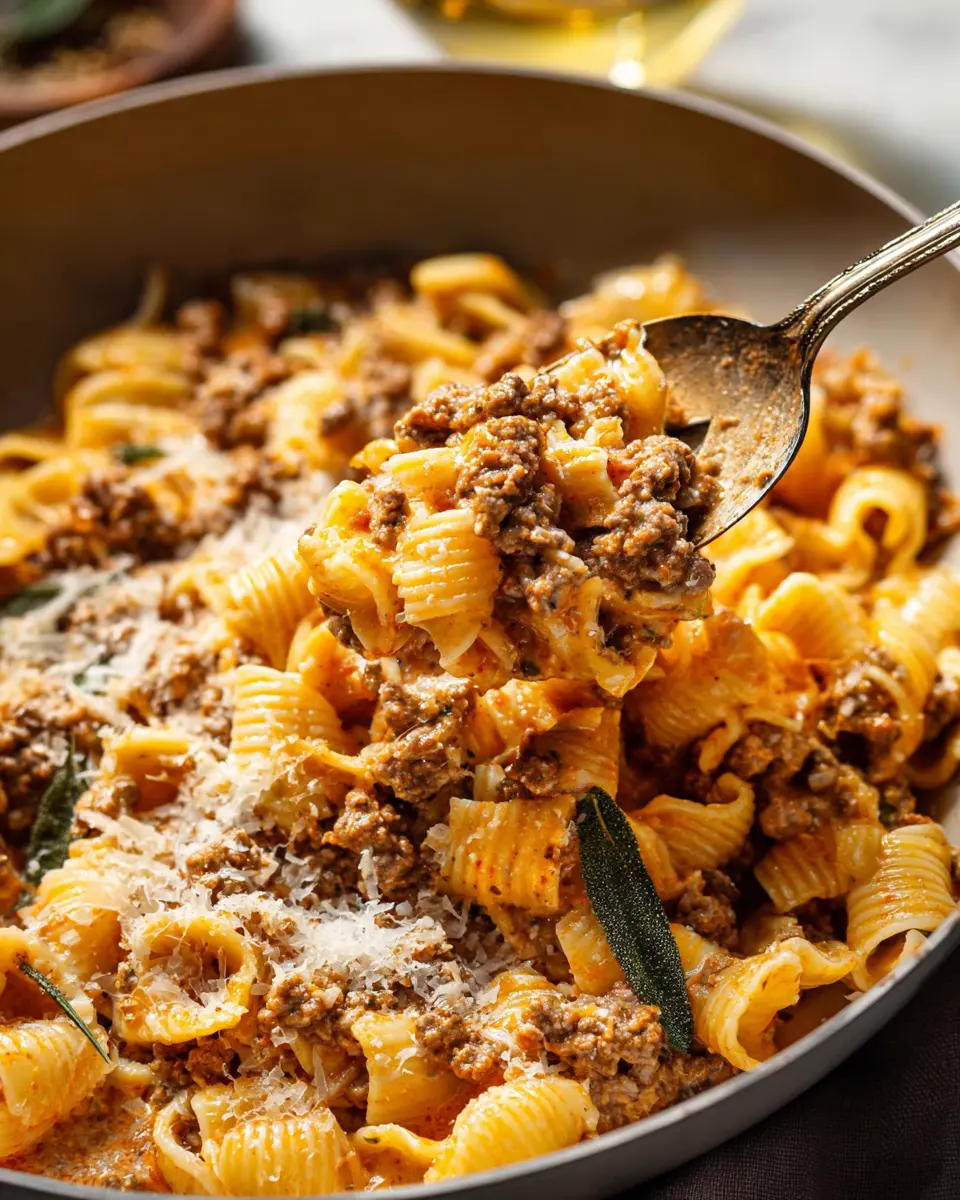
Serving Suggestions for White Bolognese Sauce
Perfect Pasta Pairings
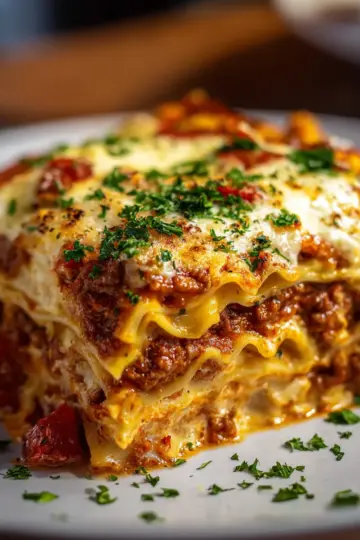
When it comes to white bolognese sauce, the right pasta can elevate your dish. Try it with egg pappardelle for a soft, silky experience or fettuccine for a hearty bite. If you're feeling adventurous, even lasagna sheets can be used for an incredible baked variant!
Complementary Side Dishes
To complete your meal, consider serving a light, crisp arugula salad dressed in lemon vinaigrette. Its peppery greens balance the richness of the sauce beautifully. Alternatively, garlic bread makes a great side, perfect for soaking up every drop of that luscious sauce. Pair your dish with a chilled glass of sparkling water or herbal tea for a well-rounded dining experience.
Explore more side dish inspiration here.
Time Breakdown for White Bolognese Sauce
Preparation Time
Getting everything ready for your white bolognese sauce is a breeze! Plan for about 30 minutes to chop your vegetables and measure out your ingredients. If you're multitasking in your kitchen, this could be a fun part of the process, too!
Cooking Time
Next, it’s time to let those flavors develop. The actual cooking for your sauce will take approximately 2 hours. This slow simmering allows the flavors to meld beautifully, giving your sauce that rich and comforting depth that makes every bite memorable.
Total Time
When you add it all up, you’re looking at around 2 hours and 30 minutes in total for this delightful recipe. Perfect for a cozy evening in, where you can enjoy a comforting bowl of creamy white bolognese sauce that’s sure to impress.
Feel free to check out this guide for more tips on sauces that can elevate your home cooking!
Nutritional Facts for White Bolognese Sauce
Calories
A serving of white bolognese sauce typically contains around 400-450 calories, depending on the portion size and specific ingredients used. This makes it a hearty choice, perfect for a filling meal.
Protein
You can expect to get about 25-30 grams of protein per serving, thanks to the combination of ground veal and Italian sausage. This protein boost makes the sauce not only tasty but also satiating!
Carbohydrates
White bolognese sauce has roughly 10-15 grams of carbohydrates per serving, primarily derived from the vegetables and any pasta you pair it with. This keeps it lower in carbs while ensuring you still get a flavorful and rich sauce to enjoy.
For more in-depth nutritional information, you might find the USDA Food Composition Databases useful!
FAQs about White Bolognese Sauce
What is the difference between White and Traditional Bolognese?
The main distinction between white bolognese sauce and traditional bolognese lies in the absence of tomatoes in the white version. While traditional bolognese features a hearty tomato base, the white variant offers a creamy, rich flavor profile, often utilizing ground veal and Italian sausage. This unique combination results in a silkier texture and a greater emphasis on the savory elements of the meat and aromatics.
Can I freeze White Bolognese Sauce?
Absolutely! Freezing your white bolognese sauce is a great way to save leftovers for later. Be sure to let the sauce cool completely before transferring it to an airtight container. It can easily be stored in the freezer for up to three months. When you're ready to enjoy it again, simply thaw it in the refrigerator overnight and reheat on the stovetop.
What pasta works best with White Bolognese Sauce?
While you can pair various pasta types with white bolognese sauce, pappardelle, tagliatelle, or even gnocchi tend to be fantastic choices. Their broad surface area allows the creamy sauce to cling beautifully, making every bite a delightful experience. Consider experimenting with your pasta shapes to find your favorite match!
Conclusion on White Bolognese Sauce
In summary, white bolognese sauce is a comforting and sophisticated dish that can elevate any meal. Its creamy texture, combined with robust flavors from the mix of ground meat and vegetables, makes it a delightful choice for gatherings. Serve it over your favorite pasta and enjoy every bite!
White Bolognese Sauce
Equipment
- food processor
- braiser or dutch oven
- Large Skillet
Ingredients
White Bolognese Sauce
- 2 tablespoons unsalted butter
- 8-10 leaves large sage
- 4 oz pancetta *finely diced*
- 1 lb ground veal
- 1 lb ground hot Italian sausage *removed from casings*
- 4 cloves garlic *minced*
- 1 unit leek *light green and white parts only, chopped*
- 1 large shallot *halved*
- 3 ribs celery *roughly chopped*
- 1 bulb fennel *cored and roughly chopped*
- 2 units carrots *peeled and roughly chopped*
- 1.5 cups dry white wine
- 2 cups homemade chicken stock
- 1 cup heavy cream
- 2 leaves bay leaves
- 0.25 teaspoon freshly grated nutmeg *optional*
- 4 oz wedge parmesan cheese *rind reserved*
- Kosher salt
- Freshly cracked black pepper
For Serving
- 8-16 oz pasta (I like egg pappardelle noodles)
- 1 cup reserved pasta water
- 0.5 cup heavy cream
- Grated parmesan cheese
Instructions
Instructions
- Add the chopped carrots, shallot, leek, carrots, and fennel to the bowl of a food processor and pulse until the vegetables are finely chopped, but not mush. If you do not have a food processor, you will need to very finely dice all the vegetables so that they melt into the sauce.
- In a large braiser or dutch oven, melt the butter over medium heat. Once the butter is foamy, add the sage leaves and fry for 3-4 minutes, flipping once, until crispy. Transfer the sage leaves to a paper towel-lined plate.
- Add the pancetta to the pan and cook for 5-6 minutes, stirring occasionally, until crispy. Using a slotted spoon, transfer the pancetta to a bowl. Add the ground veal and Italian sausage to the pan and use a spoon to break up the meat, cooking until browned and most of the liquid has evaporated. Using a slotted spoon, transfer the meat to the same bowl with the pancetta.
- Add the pulsed veggies to the pan and cook for 5 minutes, stirring occasionally, until the veggies are softened and slightly browned. Add the garlic and cook for 1 minute more. Return the ground meat and pancetta to the pan and add the white wine. Simmer for 3-4 minutes, using a spoon to scrape up any browned bits on the bottom of the pan.
- Add the chicken stock, cream, nutmeg, bay leaves, and the rind of the parmesan cheese and bring to a simmer. Lightly season with salt and pepper. Cover loosely with a lid to allow for some evaporation and reduce the heat to low. Simmer for about 2 hours, stirring occasionally. Season to taste with salt and pepper. Discard the bay leaves and parmesan rind.
- To serve: Bring a pot of lightly salted water to a rolling boil. Add the pasta and cook to al dente. Reserve 1 ½ cups starchy pasta water and then drain. In a large skillet, add half of the sauce with the pasta water and bring to a simmer. Simmer for about 10 minutes, until some of the liquid has evaporated. Add the heavy cream and the al dente pasta to the pot. Cook for another 4-5 minutes until the sauce is glossy and coats the pasta. Stir in ½ cup freshly grated parmesan cheese and season to taste with salt and pepper.
- Transfer to a serving bowl and top with the crispy sage and more freshly grated parmesan cheese.
Leave a Reply