
Introduction to Moussaka: Greek Beef and Eggplant Lasagna
What is Moussaka and Why Should You Try It?
Moussaka is an iconic dish that embodies the heart of Greek cuisine, often compared to lasagna but with a uniquely delicious twist. This layered dish features tender slices of eggplant, a savory filling of ground beef or lamb, and a creamy béchamel sauce, creating a flavor profile that is both rich and comforting.
Why should you consider making Moussaka Greek Beef and Eggplant Lasagna? For starters, it’s a fantastic way to impress your friends at dinner gatherings. The combination of spices like oregano and cinnamon infused in the meat sauce, paired with the creamy bechamel, creates a dish that feels special yet is achievable for any home cook. Additionally, it’s a wonderful way to incorporate vegetables into your meals without sacrificing flavor.
Whether you’re exploring Greek culture through food or simply looking for something new and exciting to add to your recipe repertoire, Moussaka is a delightful choice. Plus, with the option to prepare it in advance or freeze leftovers, it’s a dish that suits our fast-paced lives. For a deep dive into the recipe and detailed instructions, check out The Food And Cooking Of Greece by Sara Nassopoulos. You won’t regret it!
If you're interested in more delicious Greek recipes, consider exploring Mediterranean cooking styles and ingredients at reputable sources like the Mediterranean Diet Foundation.
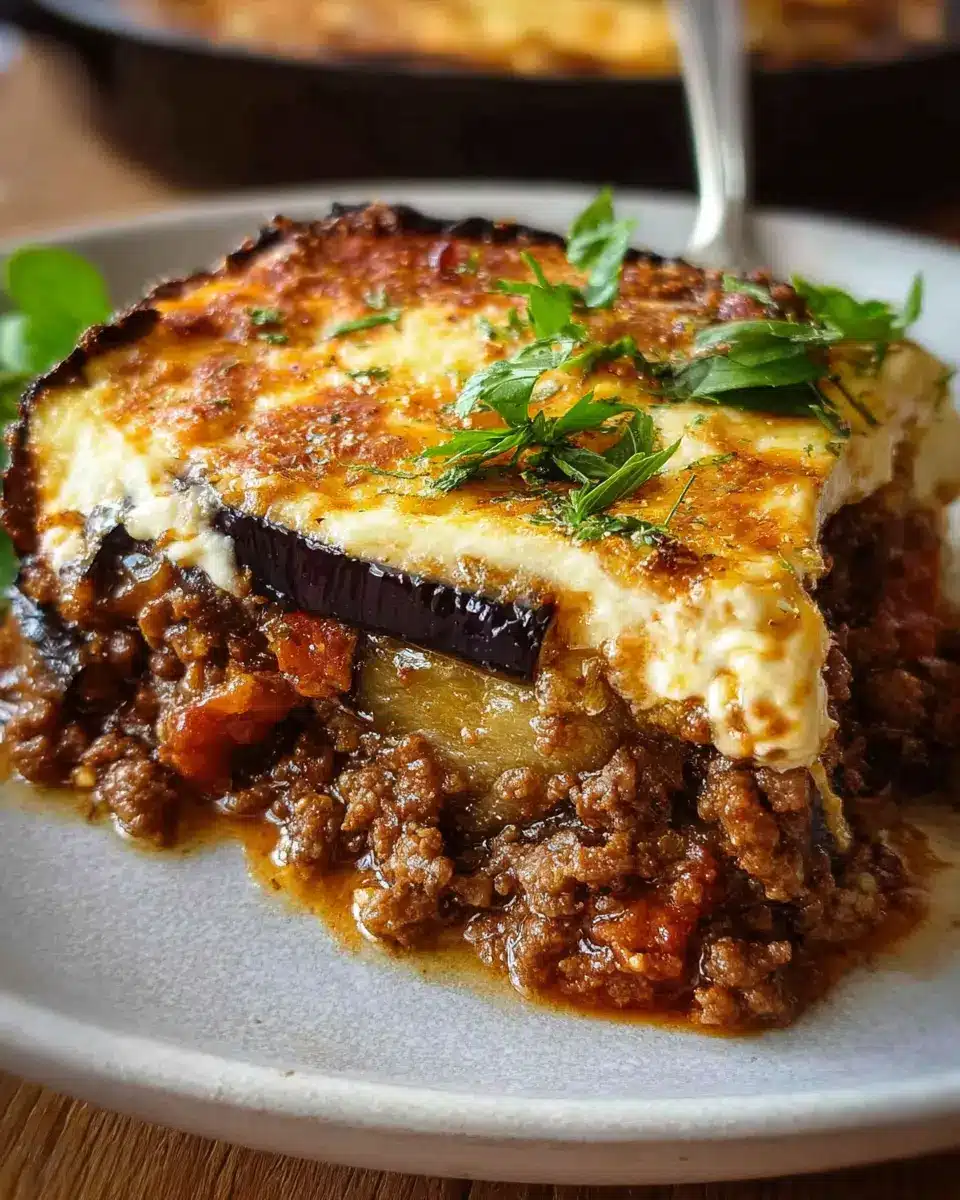
Ingredients for Moussaka: Greek Beef and Eggplant Lasagna
Essential ingredients for the moussaka
To create a mind-blowing Moussaka Greek Beef and Eggplant Lasagna, you'll need a mix of hearty and flavorful ingredients. Here’s what you ought to gather:
- Eggplant: 1 kg (2 lb), sliced into 0.75 cm (0.3") thick rounds.
- Ground Meat: 700 g (1.4 lb) of ground beef or lamb for that rich, savory filling.
- Vegetables: 1 diced onion, 3 minced garlic cloves, and crushed tomatoes for a robust sauce.
- Herbs and Spices: Dried oregano, cinnamon, bay leaves, and sugar add layers of flavor.
- Bechamel Sauce: Butter, flour, milk, and cheese form this creamy topping that takes your dish to the next level.
Optional ingredients for added flavor
While the essential ingredients provide a strong base, consider enhancing your moussaka with some optional additions:
- Cheese Variation: If you can find Kefalotiri cheese, it adds an authentic Greek touch.
- Nutmeg: A dash of freshly grated nutmeg in the béchamel can elevate the flavor.
- Red wine alternative: Use beef broth instead of wine for added depth without the alcohol.
These simple tweaks can significantly enhance your dish, making your Moussaka not just a meal but an experience. For more tips, check out resources like Mediterranean Living or Greek Spoon for authentic flavor inspirations!
Preparing Moussaka: Greek Beef and Eggplant Lasagna
Making Moussaka, the iconic Greek beef and eggplant lasagna, may seem daunting at first glance, but trust me—once you dive in, you'll find it's a rewarding culinary journey. Let’s break it down step-by-step to make this delicious dish feel manageable and fun!
Prepare the Eggplant
Start by slicing 1 kg (about 2 lbs) of eggplant into 0.75 cm (roughly 0.3 inches) thick rounds. Sprinkle these slices generously with salt and layer them in a colander to allow them to sweat for about 30 minutes. This step is crucial; salting removes excess moisture and bitterness, ensuring your moussaka won’t turn out soggy. While the eggplant sweats, preheat your oven to 240°C (450°F) and get ready for the next steps!
Once they’ve released some liquid, rinse the eggplant slices under cold water and pat them dry with a paper towel. Lay them on parchment-lined baking trays, brush lightly with olive oil, and bake for 15-20 minutes until slightly browned. Set aside to cool.
Cook the Meat Filling
In a large skillet, heat 1 tablespoon of olive oil over medium-high heat. Toss in one diced onion and three minced garlic cloves—sauté until fragrant and translucent. Add 700 g (1.4 lbs) of ground beef (or lamb if you prefer) to the pan, breaking it up as it cooks until it’s no longer pink. For a depth of flavor, add in 400 g (14 oz) of crushed tomatoes, your seasoned broth, bay leaves, and spices including oregano and a hint of cinnamon. Let this simmer for about 15 minutes until it thickens into a mouthwatering filling.
Make the Bechamel Sauce
Now, for that creamy bechamel sauce! Melt 60 g (4 tablespoons) of butter in a medium saucepan over medium heat, then whisk in 5 tablespoons of plain flour and cook for a minute until it’s golden. Gradually add 2.5 cups of milk while stirring constantly to avoid lumps. Once it thickens, remove from heat, whisk in ½ cup of grated cheese, a dash of nutmeg, and your seasonings. Let this cool slightly before whisking in an egg and an egg yolk to finish the sauce.
Assemble the Layers
Lower your oven temperature to 180°C (350°F). In your baking dish (about 26 cm or 9 inches), layer half the baked eggplant, followed by the complete meat filling. Add a second layer of eggplant, then pour over that luscious bechamel sauce, finishing with a sprinkle of breadcrumbs on top to ensure it gets golden and crispy.
Bake the Moussaka
Finally, it’s time to bake your masterpiece! Place the assembled moussaka in the oven for 30-40 minutes, or until bubbling and golden brown on top. Let it rest for about 10 minutes before serving; this not only helps with slicing but also allows the flavors to meld beautifully.
And there you have it—a delicious, homemade Moussaka Greek Beef and Eggplant Lasagna! Perfect for gatherings or a comforting weeknight dinner. Pair it with a crisp salad or a glass of refreshing lemonade for a delightful meal. Enjoy your culinary adventure!
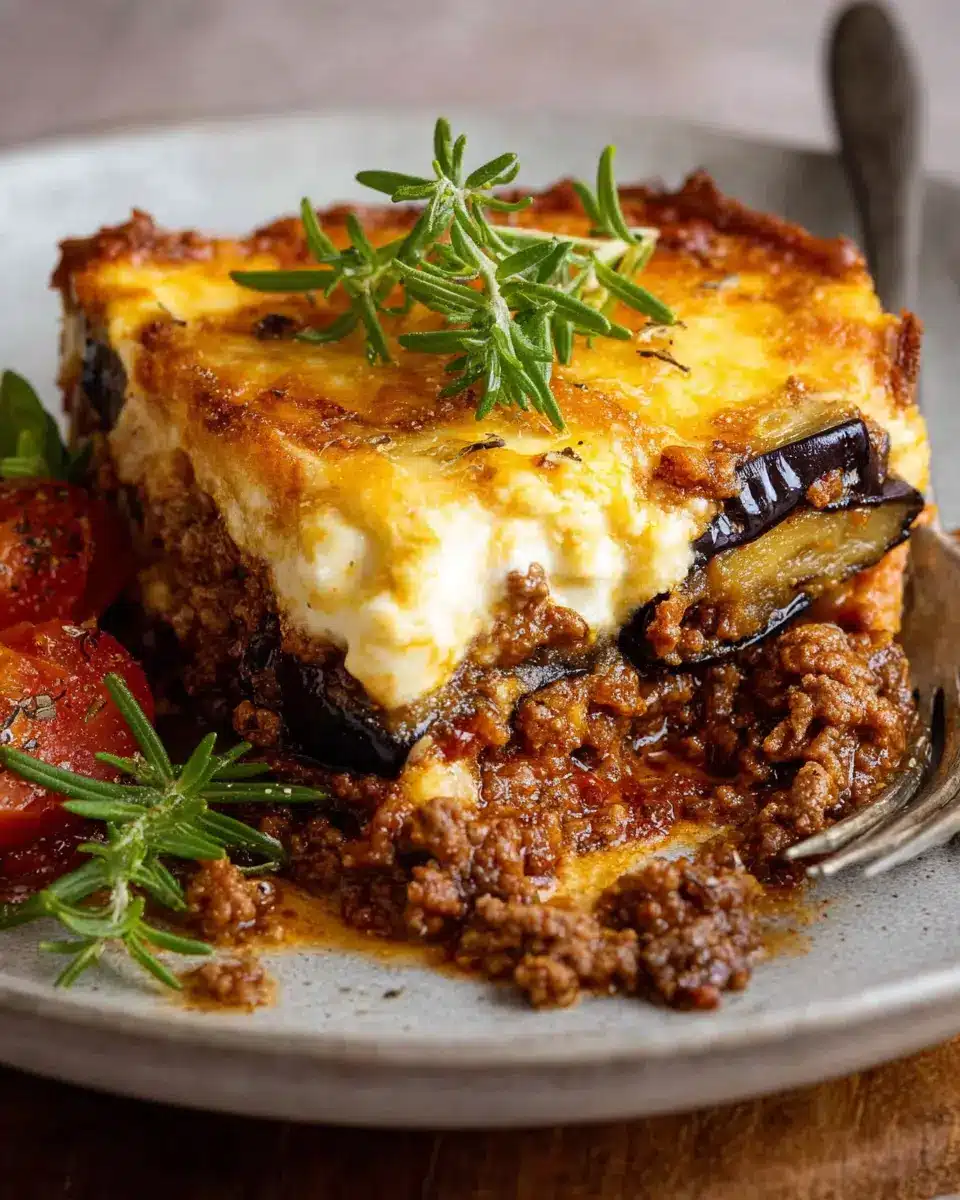
Variations of Moussaka: Greek Beef and Eggplant Lasagna
Vegetarian Moussaka Options
If you're looking to enjoy a Moussaka Greek Beef and Eggplant Lasagna without meat, you're in luck! Vegetarian moussaka substitutes the beef with a medley of vegetables, such as zucchini, mushrooms, and bell peppers, which provide unique textures and flavors. Some add lentils or chickpeas for protein. For a creamier texture, consider incorporating ricotta or cottage cheese into the béchamel sauce. Not only is this variation delicious, but it’s also a fantastic way to pack in nutrients. Check out this vegetarian moussaka recipe for inspiration!
Other Protein Alternatives
If you're keen on mixing it up from traditional beef, try using ground turkey or chicken for a lighter twist on your Moussaka Greek Beef and Eggplant Lasagna. These proteins will keep the dish hearty yet less heavy. Alternatively, plant-based ground meat replacements work beautifully and can satisfy both vegetarians and meat-eaters alike. Don’t hesitate to experiment—different seasonings can highlight various flavors, keeping your moussaka exciting every time you make it!
Cooking Tips and Notes for Moussaka: Greek Beef and Eggplant Lasagna
Tips for Perfecting the Eggplant
To achieve the perfect texture and flavor in your Moussaka Greek Beef and Eggplant Lasagna, start by salting the eggplant. This draws out the bitter liquid and prevents sogginess. Slice the eggplant and let it sweat for about 30 minutes before patting it dry. While frying is traditional, baking is healthier and easier—just brush the eggplant slices with olive oil and bake until lightly browned and softened.
Notes on Storing and Reheating Leftovers
If you're lucky enough to have leftovers, store them in an airtight container in the fridge for up to three days. For reheating, preheat your oven to 180°C (350°F) and cover the dish. Bake for about 25 minutes until hot throughout. For longer storage, you can freeze it—properly wrap it up and it will hold its flavor for a couple of months. Enjoying moussaka the next day can be just as delicious as fresh! For additional eggplant tips, check out Epicurious for more expert advice.
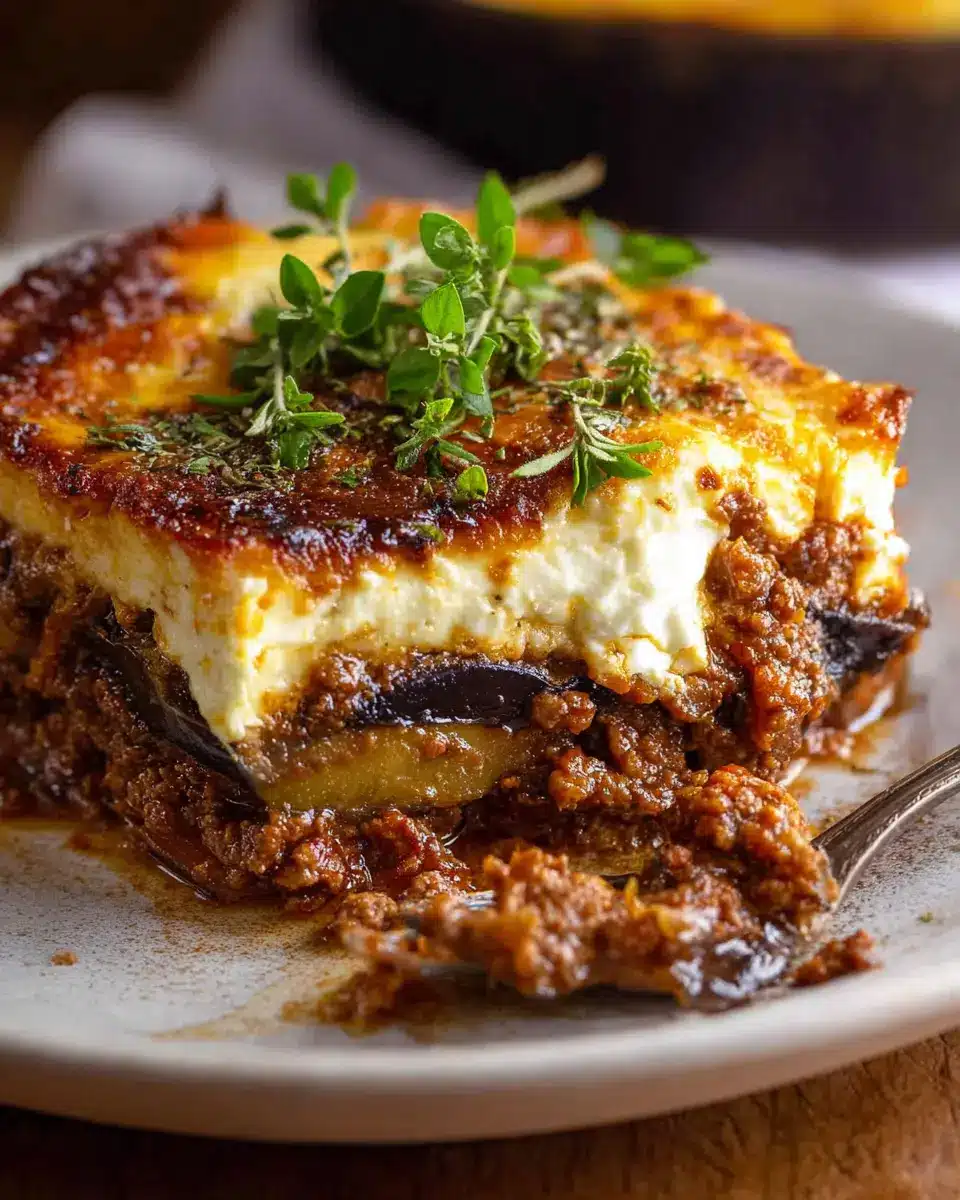
Serving Suggestions for Moussaka: Greek Beef and Eggplant Lasagna
Ideal sides and beverages to complement moussaka
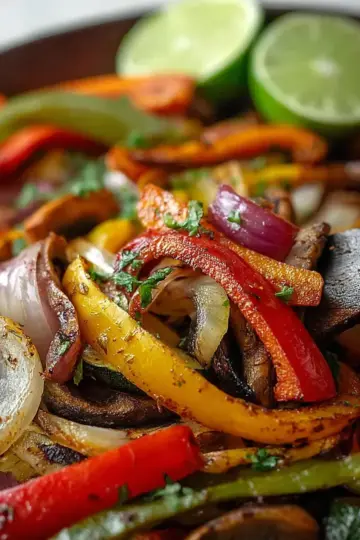
When serving Moussaka, consider pairing it with a light Greek salad featuring tomatoes, cucumbers, olives, and feta cheese for a refreshing crunch. For a hearty touch, roasted vegetables such as zucchini and bell peppers beautifully complement the dish. If you’re looking for beverages, opt for sparkling water with a slice of lemon or a crisp Greek white wine like Assyrtiko—these options enhance the flavors without overpowering them.
Presentation tips for serving
For an elegant presentation, serve your Moussaka in a rustic baking dish that showcases the beautiful layers of eggplant and béchamel. Slice into generous portions and consider garnishing with a sprinkle of fresh parsley or a few olives on the side. A simple arrangement on a wooden board adds a charming touch that invites guests to dig in—perfect for impressing at your next dinner party!
For more ideas on serving, check out this guide on pairing Greek dishes.
Time Breakdown for Moussaka: Greek Beef and Eggplant Lasagna
Preparation Time
The preparation for Moussaka takes about 40 minutes. This includes slicing the eggplant, making the meat sauce, and whisking up that creamy béchamel. Don’t worry if it feels like a lot; the rewards are worth the effort!
Cooking Time
Once you're all prepped, the cooking time is around 30 minutes. This is when you’ll bake that beautiful layered casserole until it’s golden and bubbling, filling your kitchen with the delightful aroma of Greek cuisine.
Total Time
In total, you're looking at approximately 1 hour and 10 minutes from start to finish. Perfect for a cozy evening at home, this dish serves wonderfully for a gathering or a special dinner. Now, let’s dive into this delicious recipe together!
For inspiration and additional tips, check out the Mediterranean Diet for a healthy way to enjoy Greek flavors.
Nutritional Facts for Moussaka: Greek Beef and Eggplant Lasagna
Calories per serving
Each serving of this delicious Moussaka, Greek Beef and Eggplant Lasagna contains approximately 434 calories. This makes it a rich, satisfying meal that beautifully combines flavor and nutrition.
Nutritional content overview
When it comes to Moussaka, you're not just indulging in comfort food; you're also benefiting from a diverse array of nutrients. Here's a quick look at its nutritional highlights:
- Carbohydrates: 20g
- Protein: 32g
- Fat: 24g (with 10g saturated fat)
- Cholesterol: 158mg
- Fiber: 5g
- Sugars: 7g
- Key Vitamins: Vitamins A and C
- Iron: 4.1mg
This dish is packed with protein, primarily from the beef or lamb, and the eggplant adds fiber and essential nutrients without overwhelming your carb count. With a blend of spices like oregano and cinnamon, not only is this Moussaka comforting, but it’s also a healthy choice in the world of hearty meals.
Need more info on the health benefits of eggplants? Check out this resource from Healthline.
For those curious about making more Mediterranean-inspired dishes, consider looking into the health advantages of the Mediterranean diet—it’s linked to various health benefits, including heart health and longevity!
Keep this nutritional breakdown in mind as you prepare your Moussaka! Enjoy the layers of flavor while feeling good about what’s on your plate.
FAQs about Moussaka: Greek Beef and Eggplant Lasagna
Can I freeze moussaka?
Absolutely! Freezing is a great way to enjoy your Moussaka Greek Beef and Eggplant Lasagna later. Just make sure to let it cool completely before wrapping it tightly in cling wrap. It should retain its deliciousness for up to three months. When you’re ready to dig in, thaw it in the fridge overnight, then reheat it at 180°C (350°F) for about 25 minutes until it’s heated through.
What cheeses work best in moussaka?
For authentic flavor, traditional Greek Kefalotiri cheese is the go-to, but if you can’t find it, don’t fret! Grated Parmesan cheese or even Feta cheese can work well. These options will add that rich, creamy texture that complements the robust flavors of the moussaka beautifully.
How long can moussaka be stored in the fridge?
Once cooked, your moussaka will stay fresh in the fridge for about three to five days if stored in an airtight container. This makes it perfect for meal prepping! Just reheat gently before serving to enjoy the flavors once more.
For more tips on storage, consider checking resources from FoodSafety.gov for guidance on keeping your meals fresh.
Conclusion on Moussaka: Greek Beef and Eggplant Lasagna
Moussaka, the Greek beef and eggplant lasagna, is a warm, hearty dish perfect for any gathering. With its layers of savory meat sauce, tender eggplant, and creamy béchamel, this recipe invites everyone to the table. Give it a try—you’ll be serving up smiles with every slice!
Moussaka (Greek Beef and Eggplant Lasagna)
Equipment
- Large colander
- skillet or pot
- Baking Dish
- parchment paper
- Pan
Ingredients
Eggplant
- 1 kg eggplant (aubergines) 0.75cm / 0.3" thick slices
- 1 teaspoon salt
- 2 - 3 tablespoon olive oil
Filling
- 1 tablespoon olive oil
- 1 cup onion diced (brown, white, yellow)
- 3 cloves garlic minced
- 700 g ground beef or lamb (mince) 1.4 lb (Note 1)
- ½ cup red wine dry (optional)
- 400 g crushed tomatoes
- 3 tablespoon tomato paste
- 1 cup beef broth/stock Note 2
- 1 cube beef bouillon crumbled (or 1 teaspoon powder)
- 2 bay leaves
- 1.5 teaspoon sugar any
- 2 teaspoon dried oregano
- ½ teaspoon cinnamon or 1 stick, use whole
- ¾ teaspoon salt
Bechamel Sauce
- 4 tablespoon butter (60g)
- 5 tablespoon plain flour
- 2 ½ cups milk (any fat %)
- ¼ teaspoon nutmeg freshly grated (optional)
- ½ cup parmesan cheese grated (or Kefalotiri Cheese) (Note 3)
- 1 whole egg
- 1 yolk egg yolk
- 1 ¼ teaspoon Vegeta vegetable or chicken stock powder (or salt) (Note 4)
- ¼ teaspoon pepper
Topping
- ⅓ cup panko breadcrumbs (Note 5)
Instructions
Eggplant
- Place eggplant slightly overlapping in a large colander. Sprinkle with some salt. Repeat with remaining eggplant.
- Leave to sweat for 30 minutes. Meanwhile, make Meat Sauce and Béchamel Sauce.
- Preheat oven to 240C/450F.
- Pat eggplant dry - make sure to do this well, otherwise it's too salty. Lay on parchment paper lined trays (you might need 3 trays, work in batches), brush with oil.
- Bake 15 - 20 minutes or until lightly browned and softened. Remove and set aside to cool slightly.
Meat Sauce
- Heat olive oil in a large skillet or pot over high heat, then cook the garlic and onion for 2 minutes.
- Add the beef or lamb and cook until it changes from pink to brown, breaking it up as you go.
- Add wine, cook for 1.5 minutes or until alcohol smell is gone.
- Add remaining ingredients and stir to combine. Bring to a simmer, then lower heat to medium low and cook for 15 minutes, or until reduced to a thick sauce.
Bechamel Sauce
- Melt butter in a pan over medium heat. Add flour and cook for 1 minute, stirring constantly.
- Stirring constantly, slowly add the milk. Then stir regularly for 3 to 5 minutes or until it thickens so that it thickly coats the back of a wooden spoon.
- Remove from the stove and whisk in cheese, nutmeg, Vegeta/stock powder and pepper.
- Allow to cool for 5 minutes, then whisk the eggs in. Cover with lid until required.
Assemble
- Lower oven to 180C/350F (all oven types).
- Place half the eggplant in the bottom of a baking dish, then top with all the Filling.
- Top with remaining eggplant, then pour over the Béchamel Sauce, sprinkle with breadcrumbs.
- Bake for 30 - 40 minutes or until golden brown. Allow to stand for 10 minutes before serving.



Leave a Reply